Crafting genuine gratitude through advanced AI Enabling students, parents, and fellow educators to express their heartfelt gratitude to their teachers.


Key Takeaways
Stride needed a platform to help students and parents write meaningful thank-you notes to teachers — while filtering inappropriate content at scale
OneSpring built an AI-powered writing assistant with sentiment analysis, personalization options, and profanity detection using OpenAI and AWS Lambda
Delivered a fully 508c-compliant digital hub for teacher appreciation with real-time sentiment scoring and AI-assisted message enhancement
Thank My Teacher Initiative
In an era where digital communication often takes precedence over face-to-face interactions, the team behind "Thank My Teacher" recognized a significant need in the educational community.
Our mission was to create a specialized platform that not only utilizes state-of-the-art technology but also retains the emotional warmth and sincerity often missing in digital exchanges.
This initiative was particularly geared towards enabling students, parents, and fellow educators to express their heartfelt gratitude to teachers. By merging modern tech with the universal and timeless act of saying "thank you," we aim to elevate the experience of giving and receiving thanks within the education sector.
Challenge
The imperative for the Thank My Teacher team was clear:
Provide assistance when composing the "thank you" message to the teacher.
Leverage artificial intelligence to identify and flag inappropriate, negative, or vulgar language within the thank-you notes.
These goals presented a unique set of challenges, such as elevating the quality of digital communication, to ensure users can convey their gratitude effectively and genuinely.
Also, the complexity associated with handling intentionally misspelled profanity or symbols replacing standard characters—a common occurrence in contemporary online communications.
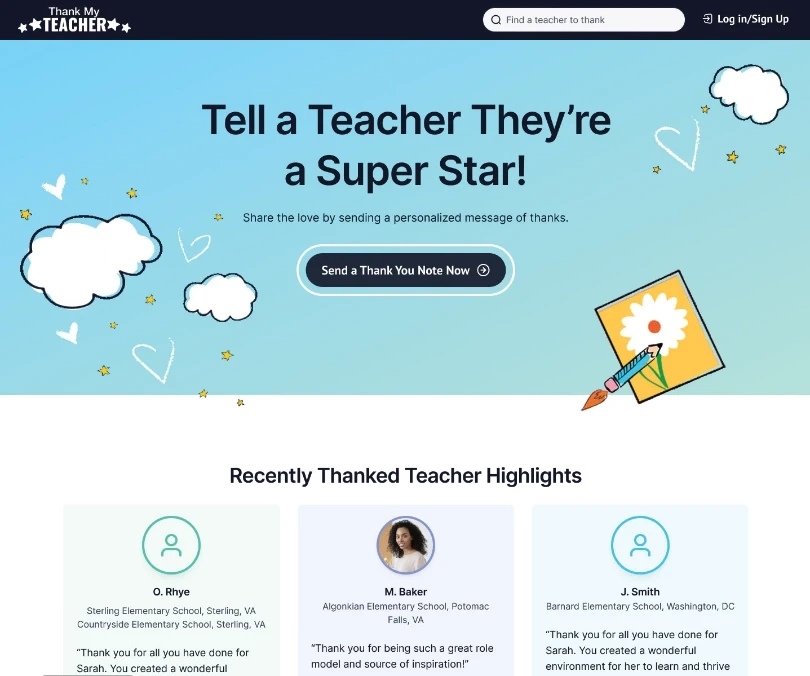
Figure 1.0 - Thank My Teacher home page
Solution: "Thank My Teacher" Writing Assistant
Two-Fold Strategy
Our solution approach was two-fold. First, provide a "Thank My Teacher" writing assistant to help the student or parent create a meaningful and genuine message of gratitude. Our approach was to create a writing assistant that integrates AI to elevate the quality of digital communication, ensuring that users can convey their gratitude effectively and genuinely.
Key Features
Sentiment Analysis
A standout feature is its sentiment analysis capability. As a user drafts a thank-you note, the AI can promptly identify and highlight any negative undertones, advising on potential revisions to better align the message with its intended sentiment of appreciation. This isn't just about censoring or correcting; it's about helping users effectively communicate their feelings and achieve the desired impact.
Personalization Options
What adds depth to this tool is the user's ability to tailor their message according to specific sentiments. They can emphasize aspects like:
Support
Expertise
Dedication
Patience
Instances of going beyond the norm
Such granularity ensures that users aren't just penning generic thank-you notes, but ones that genuinely reflect their experiences.
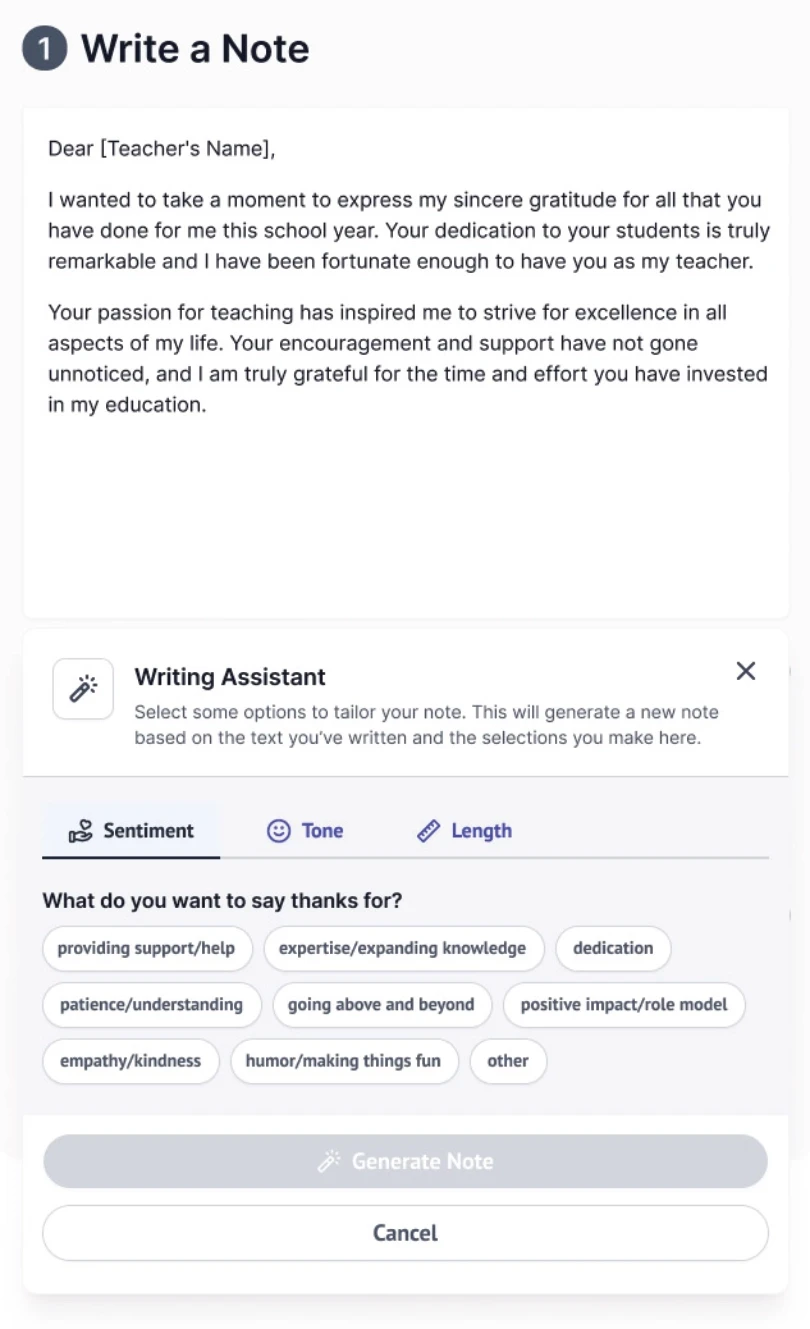
Figure 2.0 - Thank My Teacher Writing Assistant
Customization Features
The Assistant offers customization in terms of the note's length, catering to those who prefer succinct acknowledgments as well as those inclined to provide a detailed account. Through these features, the "Thank My Teacher Writing Assistant" doesn't merely automate gratitude but enriches the entire process of articulating appreciation.
Through specifically crafted API endpoints, the AI evolves from a mere tool to a caring companion. It aids, assists, and sometimes even co-writes, ensuring each message is nothing short of heartfelt.
AI-Driven Sentiment Analysis
Second, create a sentiment analysis engine driven through AI language evaluation to identify and guide corrective action. Our approach was to apply sentiment analysis, capitalizing on the capabilities of AI's advanced language models to address these challenges.
Processing Workflow
Upon a user submitting a thank-you note, the text is initially directed to the sentiment analysis API. This generates crucial data points, such as tone, sentiment score, flagged profanity, and potential suggestions for improvement.
AWS Lambda functions were employed to further tailor the AI prompt, facilitating communication with OpenAI's ChatGPT model. The ultimate decision to flag a note as inappropriate relies on a composite evaluation of both sentiment score and profanity indicators, all processed and displayed seamlessly on the frontend.
Results
A Fusion of Technology and Sentiment
Within the rapidly evolving sphere of educational technology, "Thank My Teacher" sets itself apart, serving as both a paragon of technical ingenuity and a channel for authentic human sentiment.
Development Journey
Our journey began with initial design blueprints created in Figma, then moved on to sophisticated back-end implementations utilizing WordPress and PHP.
Technical Innovation
Notably, a cornerstone of our platform's capabilities lies in the seamless integration of AI-driven API endpoints. These custom-built API endpoints serve multiple pivotal roles, from sentiment analysis to language enhancement, thus elevating the user experience to new heights.
Thanks to OneSpring's human-centered, research-driven approach, Stride now had:
AI-powered writing assistant with full API integration
Sentiment analysis engine driven through AI language evaluation
508c compliance for complete accessibility
A digital hub for gratitude in education
Accessible
508c
Frequently Asked Questions
What is the Thank My Teacher initiative?
Thank My Teacher is a digital platform built for Stride that allows students, parents, and fellow educators to write and send heartfelt appreciation messages to teachers. The platform uses AI to help users craft genuine, meaningful notes — and to flag inappropriate language before messages are sent.
How does AI improve the quality of teacher appreciation messages?
The AI writing assistant analyzes what the user wants to express and helps refine the message for clarity and emotional resonance. Users can select sentiment themes — like dedication, patience, or going above and beyond — and the AI generates personalized language that reflects those specific qualities.
What technology powers the Thank My Teacher writing assistant?
The platform integrates OpenAI's ChatGPT model via custom API endpoints, with AWS Lambda functions handling the AI prompt processing. The backend was built on WordPress and PHP, with the frontend designed in Figma before implementation.
How does sentiment analysis detect inappropriate content in thank-you notes?
As a user drafts a message, the text is sent to a sentiment analysis API that evaluates tone, assigns a sentiment score, flags profanity (including intentional misspellings and symbol substitutions), and suggests revisions. The final decision to flag a note uses a composite of the sentiment score and profanity indicators.
Why is 508c accessibility compliance important for educational platforms?
Section 508c requires federally funded digital tools to be accessible to users with disabilities. For a platform used in K-12 education — where diverse learning needs are common — accessibility compliance ensures that all students, parents, and educators can participate equally, regardless of ability.
How does the writing assistant personalize messages for different senders?
Users can select specific sentiment themes like support, expertise, or patience before generating a message. They can also control the note's length — from brief acknowledgments to detailed expressions of gratitude. This customization ensures each message reflects the writer's real experience rather than a generic template.
What role did OneSpring play in building the Thank My Teacher platform?
OneSpring led the full design and development process — from initial Figma blueprints through backend implementation in WordPress and PHP. OneSpring also architected the custom AI API endpoints for both the writing assistant and the sentiment analysis engine, and ensured the final product met 508c accessibility standards.