The Four Quadrants of AI Knowledge: Observer
How to Build AI Literacy When You're Starting From Zero


If you landed in the Observer quadrant, you are in the largest group of professionals today.
You have heard the AI conversation happening around you. You have seen the LinkedIn posts, watched a colleague demo ChatGPT in a meeting, maybe read a headline about a company replacing entire teams with AI. But you have not yet made AI part of your work, and the gap between what you have heard and what you actually understand feels wider every week.
That is not a failure. It is where most of the working world sits right now.
The numbers back this up. According to Deloitte, 78% of organizations now use AI in at least one business function. But Vention Teams research shows only 28.3% of the U.S. workforce actively uses AI day to day. The gap between what companies are doing and what individuals are doing is enormous, and you are not the exception.
The people who think they are behind are usually closer to the middle of the pack than they realize. The risk is not that you do not know AI today. The risk is staying still while the floor moves.
Here is the framework behind this article. There are four quadrants of AI maturity, mapped across two axes: how much you know and how much you apply it.
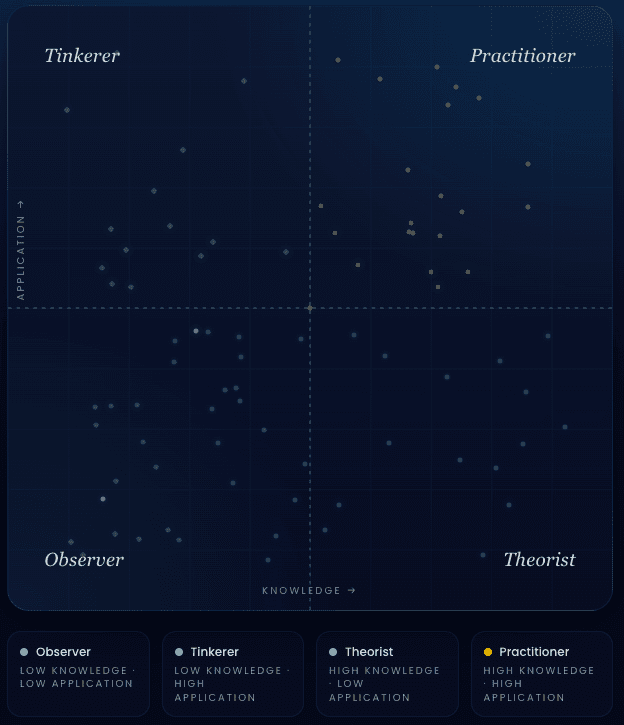
Figure 1.0 - Four Quadrant - AI Knowledge
Observer (Low Knowledge, Low Application): You are at the start of your AI journey. You have heard the buzz but have not dug in yet.
Tinkerer (Low Knowledge, High Application): You use AI tools regularly but the underlying mechanics are still fuzzy.
Theorist (High Knowledge, Low Application): You understand AI conceptually but have not built it into daily practice.
Practitioner (High Knowledge, High Application): You both know and do. You are in the top tier.
This article is for Observers. The goal is not to make you an expert. It is to help you take the first practical step and keep moving.
Why the gap feels bigger every week
Here is the uncomfortable part about being an Observer right now: the baseline expectation in your industry is moving, and it is not waiting for you to feel ready.
Worker access to AI tools increased 50% in 2025, and that number will keep climbing. What was a competitive edge two years ago is becoming a baseline assumption. The professionals who get ahead of this are not necessarily the most technical people in the room. They are the ones who started practicing before it felt urgent.
A few signals that the floor is shifting under you:
Your company has started using AI in at least one workflow, even if you are not directly involved
Job postings in your field are beginning to list AI familiarity as a preferred skill
Colleagues are using AI tools in meetings, on deliverables, or in their own workflows without making a big deal of it
The AI conversation in your industry has moved from "is this real?" to "how do we use it?"
None of this is cause for panic. But it is cause for movement. AI literacy does not grow by reading about AI. It grows by using it.
What Observers usually get wrong about learning AI
Most Observers are not stuck because they are lazy or uninterested. They are stuck because the gap between awareness and action is wider than it looks, and a specific set of beliefs keeps them on the wrong side of it.
A 2026 study published in Behaviour and Information Technology found that technostress, the anxiety and cognitive overload that comes from engaging with new digital tools, directly reduces how useful people perceive AI to be, which in turn reduces their intention to use it at all. In other words, the discomfort of starting is not just emotional. It actively shapes whether people try. The antidote is not more reassurance. It is a lower-stakes first step.
Here is where most Observers go wrong:
The Myth | The Reality |
|---|---|
"I need to understand how AI works before I use it." | You need to understand enough to try. The rest comes from doing. |
"Watching demos and reading explainers is progress." | Passive consumption rarely changes behavior. Usage does. |
"I need a course or certification first." | A two-week practice habit will teach you more than most courses. |
"AI is for technical people." | The fastest-growing user base is non-technical professionals using AI on everyday work tasks. |
"I'll start when things slow down." | Things will not slow down. The on-ramp is short. Start now. |
The pattern here is the same: Observers tend to prepare to learn instead of learning. The shift that moves you forward is choosing one tool and one task and doing something today.
The fastest path from Observer to Tinkerer: one tool, one task, 30 minutes a day
The simplest version of this advice is also the most accurate: pick one AI tool, use it on work you are already doing, and do it for 30 minutes a day for two weeks. That is it. That single habit will move you out of the Observer quadrant faster than any class, course, or explainer video.
Here is why this works. AI literacy is built through repeated, low-stakes experimentation on real problems. Each session teaches you something about how to frame a request, what the tool does well, where it falls short, and how to adjust. That feedback loop is the education. You cannot get it passively.
The three-part setup
1. Choose one tool only. Start with Claude or ChatGPT. Both are free to start. Do not split your attention across five tools. Pick one and stay with it for two weeks. Familiarity compounds.
2. Use it on tasks you already have. Do not invent practice problems. Use AI on real work: drafting an email, summarizing a long document, rewriting a proposal section, brainstorming options for a decision you are already facing, or simplifying a complex topic you need to explain to someone else.
3. Commit to 30 focused minutes. Not an hour of passive browsing. Thirty focused minutes where you are actively giving the tool a task, reviewing the output, and refining your request based on what came back.
"You have to be willing to fail to innovate." — Satya Nadella
That applies here. Your first prompts will not be great. That is the point. Each one teaches you something the next one uses.
A practical 2-week AI literacy plan for Observers
Here is a concrete starting point. You do not need to follow this exactly. The goal is to give you a structure so you are not staring at a blank prompt box wondering what to do.
Week 1: Low-risk tasks, build the habit
Each session, pick one of these and run it on something real from your current workload:
Rewrite: Paste in a draft email or document section. Ask the AI to make it clearer, shorter, or more direct.
Summarize: Paste in a long article, report, or meeting transcript. Ask for a five-bullet summary.
Brainstorm: Give the AI context on a problem you are working on. Ask for five approaches you have not considered.
Simplify: Take a complex topic you need to explain to a non-expert. Ask the AI to help you find the right language.
At the end of each session, write one sentence: What did I learn about how to ask better?
Week 2: Add judgment, raise the stakes
Now that the tool feels less foreign, push into tasks that require more of your own thinking:
Compare options: Lay out two approaches you are weighing. Ask the AI to stress-test each one.
Improve structure: Share a document or presentation outline. Ask for feedback on flow and logic.
Challenge your assumptions: Describe a decision you have already made. Ask the AI to argue against it.
Adapt for audience: Take a piece of writing. Ask the AI to rewrite it for a different reader or context.
The loop that makes this work: Give context. Get output. Review critically. Revise your prompt. Repeat.
By the end of week two, AI will feel less like a foreign concept and more like a tool you reach for when you have a problem to solve.
The fears no one says out loud
Before we get to the finish line, it is worth naming a few things that keep Observers stuck that rarely get said directly.
A March 2026 study of 614 professionals across the U.S. and Europe found that 84% of workers worry about AI-related risks, yet only 4% hold a negative view of AI's role at work. The fear is real and widespread, but it is not rooted in opposition. It is rooted in uncertainty. And uncertainty shrinks when you have firsthand experience with the tool.
Here are the fears that come up most often, and what is actually true:
"I'll look uninformed if I ask basic questions." Everyone started here. The people who look informed now asked the same questions six months ago.
"I'll become too dependent on AI and lose my own judgment." AI augments your thinking. It does not replace it. You still have to evaluate, edit, and decide. That judgment is yours.
"Using AI means my job is at risk." A 2026 Gallup poll found that about half of U.S. employees use AI once a year or not at all, and roughly 2 in 10 say they do not feel prepared to use it effectively. The workers most at risk are not those whose tasks could theoretically be automated. They are the ones who never build the skill to work alongside AI at all.
"I need to be sure before I start." Certainty comes after experience, not before it. Start uncertain. That is normal.
The common thread: these fears shrink significantly once you have actual firsthand experience with the tool. You cannot think your way out of them. You have to use your way out.
How to know you're leaving the Observer quadrant
Progress here is not dramatic. There is no certification, no test, no moment where you suddenly feel like an AI expert. The shift is quieter than that.
You are moving out of Observer when:
You reach for an AI tool without thinking about it, the way you reach for a search engine
Your prompts get more specific because you have learned what the tool responds to
You start to notice where AI helps and where it does not, and you adjust accordingly
AI becomes part of your weekly workflow, not something you try occasionally
That is the Tinkerer stage. You may not know everything about how the models work, but you are using them regularly and getting real value. That is the goal for now. Depth comes later.
Start before you feel ready
The Observer stage is normal. It is where most professionals are right now. But it should be temporary.
You do not need a course, a certification, or a perfect plan. You need one tool, one real task, and 30 minutes today. The understanding follows the doing. Every session builds something the next one uses. Six months from now, the baseline expectation in your industry will be higher than it is today. The people who will meet it are the ones who started before they felt ready.
Where do you sit on the AI maturity curve?
If you are not sure whether you are an Observer, a Tinkerer, a Theorist, or a Practitioner, take the AI Knowledge and Application Assessment. It takes a few minutes and gives you a clear picture of where you are and what to focus on next.
Start there. Then open a tool and try something today.