Advancing aerial inspection efficiency and accuracy
Optimizing the EagleView pilot experience

Key Takeaways
EagleView's contracted pilots were confident with drones but struggled with ground inspections, poor annotation tools, screen rotation issues, and connection interruptions during fieldwork
Research-driven improvements included earlier in-person training, enhanced image tagging and annotation, smoother screen rotation, retained login credentials, and battery management guidance
80% of pilots felt more confident in ground inspections; adjuster requests for additional images dropped 30%; usability concerns fell 40%; drone relaunch incidents decreased 25%
Background
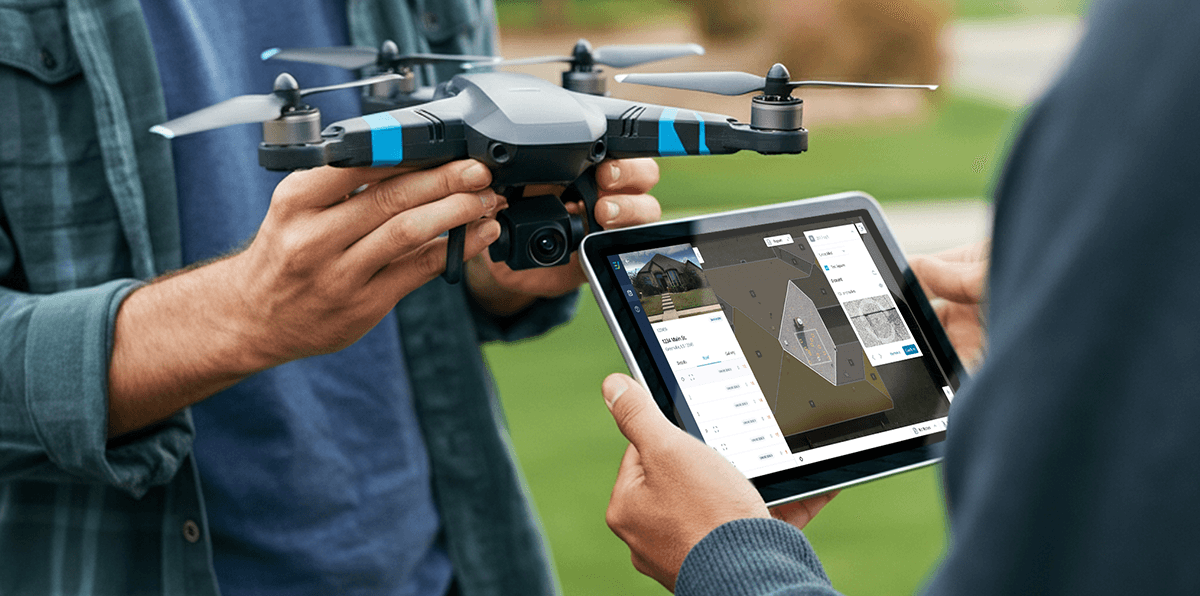
EagleView, a leader in aerial imagery and data analytics, sought to improve the user experience for its contracted pilots conducting ground and roof inspections. While the EagleView app provided essential tools for capturing inspection images, user feedback indicated several challenges that affected efficiency and confidence. To address these concerns, EagleView conducted a pilot research study to identify pain points and recommend design improvements.
“EagleView’s improvements [with OneSpring] have made our inspection process more seamless and efficient.
— Drone Pilot
Challenge
The research identified several key challenges faced by pilots using the EagleView app. Pilots were highly confident in drone operation but struggled with ground inspection requirements due to limited prior experience in the insurance industry. Many feared that photos taken from a distance might not accurately convey damage severity, potentially affecting insurance assessments.
A long gap between online and in-person training led to confusion during their first solo inspections. Pilots wanted more control over their work schedules, a smoother screen rotation experience, and improved tagging and annotation features to enhance communication with adjusters. Additionally, connection disruptions and rapid battery depletion during facet editing caused inefficiencies in the inspection workflow.
Solution
EagleView implemented several design and training enhancements to address these challenges:
In-person training was emphasized earlier in the onboarding process to build pilot confidence in ground inspections.
A comprehensive “tips and tricks” guide was introduced to provide quick references during inspections.
Clearer definitions and instructions on tagging soft metals, personal property, and anomalies were incorporated to standardize reporting.
A smoother screen rotation transition was developed to reduce pilot discomfort.
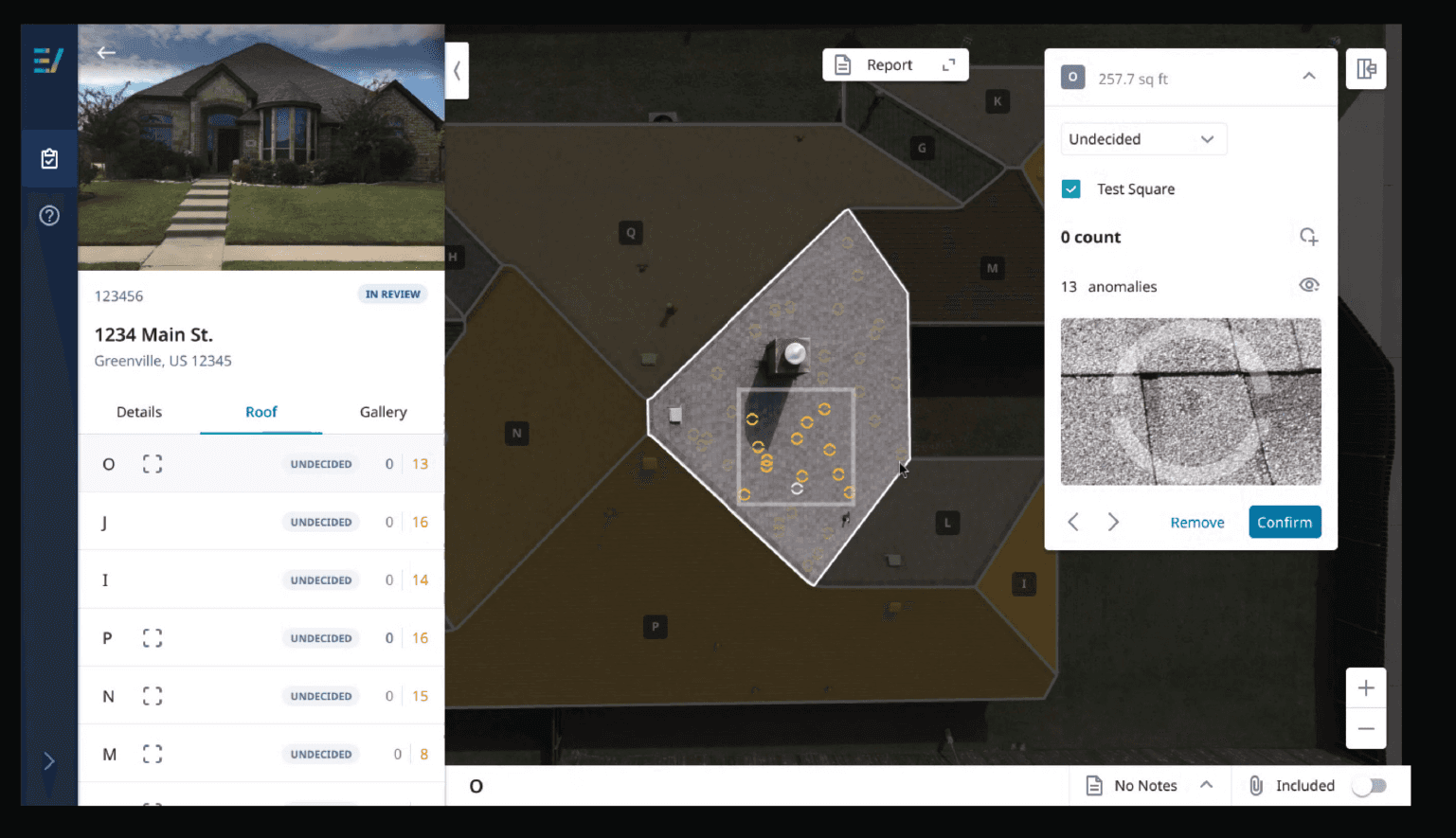
Image tagging and annotation capabilities were improved, allowing pilots to add context for adjusters.
Pilots were given greater scheduling flexibility to manage their availability more efficiently. The app was updated to retain pilot login credentials, reducing unnecessary re-logins. Battery management recommendations were introduced to maximize drone flight time. The ability to define the drone’s starting point for scanning was integrated to improve connection reliability.
Results
The implemented solutions led to significant improvements in pilot efficiency and satisfaction. Eighty percent of pilots reported feeling more confident in performing ground inspections after early in-person training.
The addition of tagging and annotation features led to a thirty percent reduction in adjuster requests for additional images. The streamlined screen rotation and navigation updates reduced pilot-reported usability concerns by forty percent. Battery management improvements and connection stability enhancements resulted in a twenty-five percent decrease in drone relaunch incidents.
Less images requested
30%
Less Usability Concerns
30%
Better connection stability
25%
Conclusion
Through targeted research and user-driven improvements, EagleView successfully enhanced the pilot experience, leading to greater efficiency, confidence, and data accuracy. These updates not only improved the inspection workflow but also strengthened the collaboration between pilots and adjusters, ensuring higher-quality assessments for insurance claims.
The enhanced tagging and annotation features allow us to capture more precise details, ultimately leading to better assessments and quicker claims processing.”
— Drone Pilot
Frequently Asked Questions
What does EagleView do and who are its pilots?
EagleView is a leader in aerial imagery and data analytics, providing inspection services for property, insurance, and infrastructure industries. Its contracted pilots conduct both drone-based and ground-level roof inspections, using the EagleView app to capture images and annotate findings for insurance adjusters.
What usability problems did EagleView pilots experience?
Pilots were confident with drone operation but lacked confidence in ground inspections due to limited insurance industry background. They struggled with poor image annotation tools, uncomfortable screen rotation, a long gap between online and in-person training, connection disruptions, rapid battery drain, and limited scheduling flexibility.
How did EagleView improve the pilot app experience?
Improvements included earlier in-person training to build ground inspection confidence, a "tips and tricks" reference guide, clearer tagging guidelines for soft metals and anomalies, smoother screen rotation, enhanced image annotation capabilities, retained login credentials, battery management recommendations, and the ability to define the drone's starting scan point for better connection reliability.
What results did EagleView's pilot experience improvements produce?
80% of pilots reported greater confidence in ground inspections after earlier in-person training. Adjuster requests for additional images dropped 30%, thanks to improved tagging and annotation. Pilot-reported usability concerns fell 40%. Drone relaunch incidents — caused by battery depletion and connection drops — decreased 25%.
Why does image tagging matter for insurance inspection accuracy?
Adjusters rely on pilot-annotated images to assess damage and determine claim outcomes. Without clear tags identifying the type, location, and severity of damage — especially for soft metals and edge-case anomalies — adjusters must request additional images, slowing claims processing and creating more work for pilots.
How does UX research improve field-based mobile apps?
Field workers use apps in conditions that lab testing can't fully replicate — poor connectivity, physical discomfort, time pressure, and variable lighting. Pilot research with real EagleView contractors surfaced friction that wouldn't surface in a standard usability test, allowing improvements that directly matched how the app is used in the field.
What is the role of onboarding in reducing pilot errors?
A long gap between initial online training and first solo inspection created a critical knowledge gap for EagleView pilots. By introducing in-person training earlier in the process, pilots arrived at their first inspection with hands-on experience and greater confidence — reducing errors and improving the quality of documentation from day one.