Redefining the future of online learning
Empowering Educators. Engaging Learners.
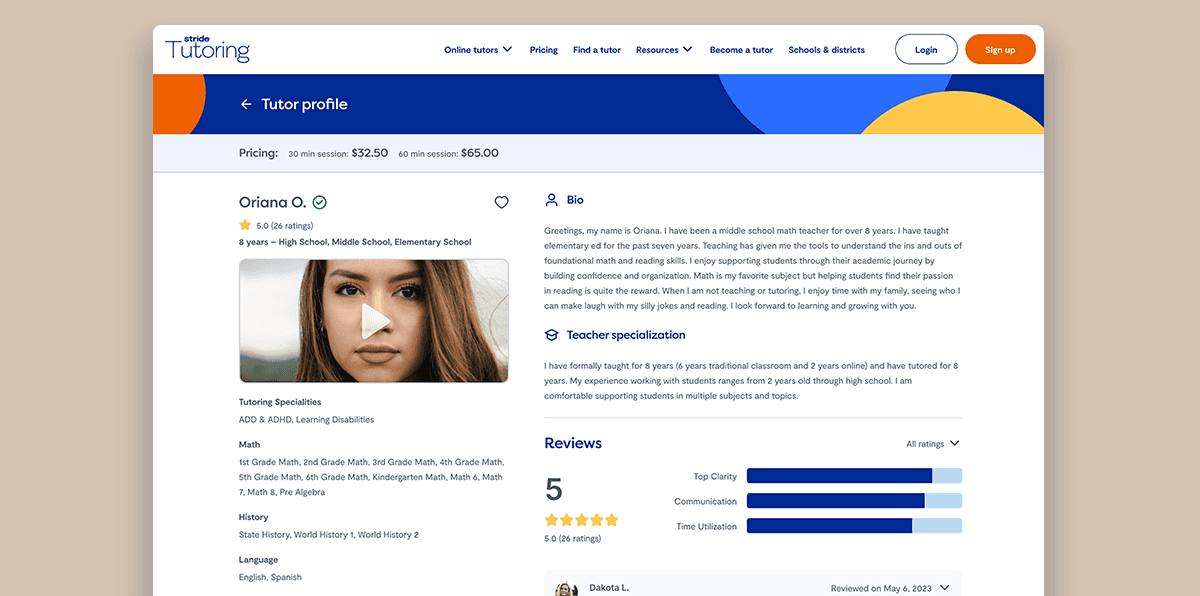

Key Takeaways
Stride's K12 Tutoring platform had inconsistent UX and poor documentation after pivoting from a B2C to a B2B model funded by ESSER
OneSpring led a full rebrand, eCommerce build, and research-driven UX overhaul using stakeholder interviews, personas, and Figma prototyping
The redesign delivered a 72% improvement in scheduling task success rates, 43% faster admin workflows, and 95% user satisfaction with visual design
Background
Stride, a leader in online education, aimed to elevate the user experience of its B2B Tutoring platform designed for schools and districts, with a focus on delivering an intuitive and competitive solution for institutional clients in the K–12 space. Formerly known as Stride Tutoring, the company rebranded to K12 Tutoring and partnered with OneSpring to tackle a range of digital design and UX challenges.
The collaboration with OneSpring involved a full rebranding initiative, the development of a new eCommerce platform, and a thorough UX audit of the existing website. These efforts were geared toward enhancing the overall digital experience and ensuring brand consistency and clarity across the platform.
"The transformation of our tutoring platform has been nothing short of remarkable."
— Senior Director, Product Strategy
Challenge
Stride’s Tutoring platform faced a range of critical challenges as K12 Tutoring’s needs evolved. Early versions of the product were built on an immature foundation with sparse documentation, making team alignment and execution difficult. Users grappled with sluggish performance, confusing scheduling flows, and inconsistent experiences across portals. These issues were exacerbated by a lack of robust user research, which initially limited the team’s understanding of user needs.
To address these growing pains—especially during a strategic shift from a B2C to B2B model driven by funding opportunities like the ESSER Fund—Stride partnered with OneSpring to lead a comprehensive UX overhaul. This transition introduced new administrative requirements and a need to redesign the platform to meet the expectations of institutional buyers and educators, rather than individual consumers.
In parallel, a UX audit of the K12 Tutoring site uncovered significant branding and UI inconsistencies. Legacy design decisions had eroded user trust and disrupted the coherence of the brand experience. These issues, combined with the lack of documentation, underdeveloped research, and shifting business strategy, made it clear that only a comprehensive UX overhaul could realign the platform with its goals and the expectations of its growing B2B audience.
Solution
OneSpring led a comprehensive redesign initiative that included a full rebrand, a robust eCommerce platform, and a UX overhaul to modernize the tutoring platform and boost Stride’s B2B presence.
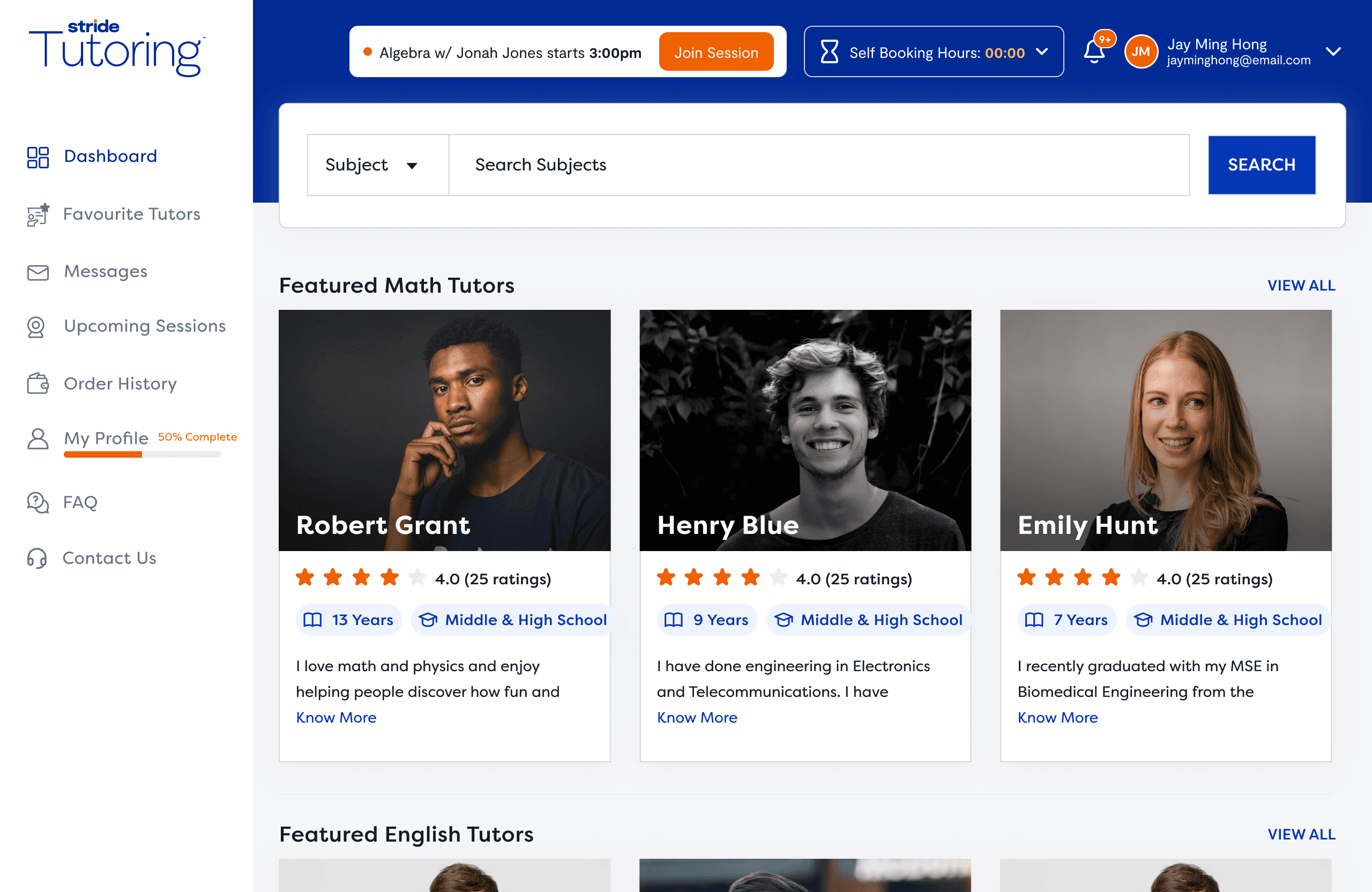
Stride student dashboard.
A research-driven UX strategy guided the transformation. OneSpring conducted stakeholder interviews, developed personas, and mapped user journeys to identify pain points and guide design. Comparative analysis of platforms like IXL Learning and Varsity Tutors revealed gaps and inspired user-focused improvements.
The UX audit exposed inconsistent UI and branding from legacy decisions that eroded trust. OneSpring addressed this with a modern design system aligned to K12’s branding, replacing fragmented patterns with scalable, cohesive components.
Wireframes and prototypes in Figma shaped the user experience, enabling iterative feedback and testing with Stride’s research team. Shared understanding workshops and expert UI reviews kept stakeholders aligned throughout.
The platform was also engineered for smooth integration with Salesforce, WordPress, and virtual classrooms like Newrow and Class.com. The outcome resulted in a scalable, user-centered platform tailored to Stride’s evolving needs and setting a new EdTech standard.
"OneSpring’s design expertise helped us deliver a tool that’s not only intuitive but truly tailored to the real-world needs of schools and districts."
— Senior Director, Product Strategy
Results
The redesigned platform delivered measurable improvements in both usability and business outcomes:
72% improvement in task success rate for scheduling and portal navigation
43% faster completion times for key administrative workflows
95% user satisfaction with visual design in post-test surveys
better success rate
72%
Faster completion time
43%
User satisfaction
95%
Other outcomes included reduced cognitive load, improved accessibility compliance, and a scalable design foundation that supports SSO and district-level integration.
"The feedback from educators has been overwhelmingly positive."
— Senior Director, Product Strategy
Conclusion
Through close collaboration with Stride and K12 Tutoring, OneSpring transformed an underdeveloped MVP into a polished, scalable B2B platform tailored for the K–12 education market. By addressing both visual consistency and strategic UX needs—from branding to platform architecture—this engagement highlights the impact of thoughtful, research-driven design in complex, evolving digital ecosystems.
Frequently Asked Questions
What was the main challenge Stride faced with its K12 Tutoring platform?
Stride's platform was built on an immature foundation with sparse documentation and inconsistent UX. After shifting from a B2C to a B2B model — driven by ESSER fund opportunities — it needed a full redesign to meet institutional buyer expectations and support educator workflows.
How did OneSpring approach the UX overhaul for Stride's tutoring platform?
OneSpring conducted stakeholder interviews, developed user personas, and mapped journey flows to identify pain points. The team used competitive analysis, Figma prototyping, and shared understanding workshops to align stakeholders and deliver an iterative, research-driven redesign.
What results did the Stride K12 Tutoring redesign produce?
The redesigned platform achieved a 72% improvement in scheduling task success rates, 43% faster completion times for administrative workflows, and 95% user satisfaction with the visual design in post-test surveys.
Why did Stride shift from a B2C to a B2B tutoring model?
Stride pivoted to a B2B model to serve schools and districts directly, taking advantage of funding opportunities like the ESSER Fund. This shift required redesigning the platform to meet the needs of institutional buyers, administrators, and educators rather than individual consumers.
What is a design system and why did Stride need one?
A design system is a library of reusable UI components, patterns, and guidelines that keep a product visually consistent and scalable. Stride needed one because legacy design decisions had created fragmented, inconsistent experiences across portals — eroding user trust and slowing development.
How does UX research improve educational software outcomes?
UX research uncovers how real users think and behave. For Stride, it revealed scheduling friction, navigation confusion, and branding inconsistencies that weren't apparent from product metrics alone. Addressing those directly led to measurable gains in task completion and satisfaction.
How does Figma prototyping speed up EdTech product development?
Figma enables rapid, iterative design with real-time collaboration between designers, researchers, and stakeholders. For Stride, Figma prototypes were used for usability testing and feedback loops — catching issues early and reducing costly changes during development.