Revolutionizing Equifax's B2B digital experience through UX service design Enhancing user engagement, navigation, and content discoverability for business customers


Key Takeaways
Equifax's B2B customers used the site mainly for logins, struggling to discover thought leadership, product updates, and industry insights beyond basic transactions
OneSpring conducted user interviews, persona modeling, journey mapping, and usability testing to redesign navigation, content categorization, and the homepage experience
Results: 50% faster product discovery, 45% more time on relevant pages, 38% increase in satisfaction scores, 27% fewer navigation-related help desk inquiries, 20% lower bounce rate
Background
Equifax sought to refine its B2B digital experience by improving its website’s usability, content structure, and engagement mechanisms. The company needed to ensure that its online presence effectively supported business customers in accessing relevant solutions, exploring products, and staying informed. To accomplish this, Equifax partnered with a UX research and service design team at OneSpring to conduct an extensive evaluation of user needs, behaviors, and pain points.

Challenge
Equifax’s B2B customers faced challenges navigating the company’s digital ecosystem, primarily using it for transactional purposes like logging in to access products. However, engagement beyond this was limited, with customers struggling to discover relevant thought leadership, product updates, and industry insights.
Navigation challenges and unclear labeling further hindered user experience, leading to inefficiencies and frustration. Additionally, website visitors varied widely in their ability to self-identify within the site’s segmented content structure, which created confusion and hindered personalization efforts.
Equifax needed to reimagine its digital experience to better align with user expectations, drive engagement, and position itself as a strategic thought leader in the industry.
Solution
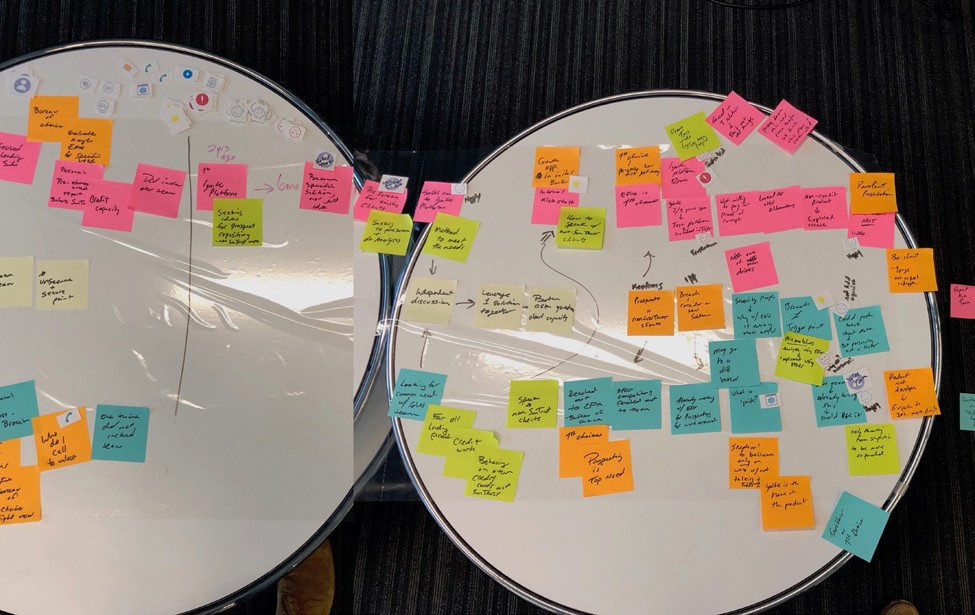
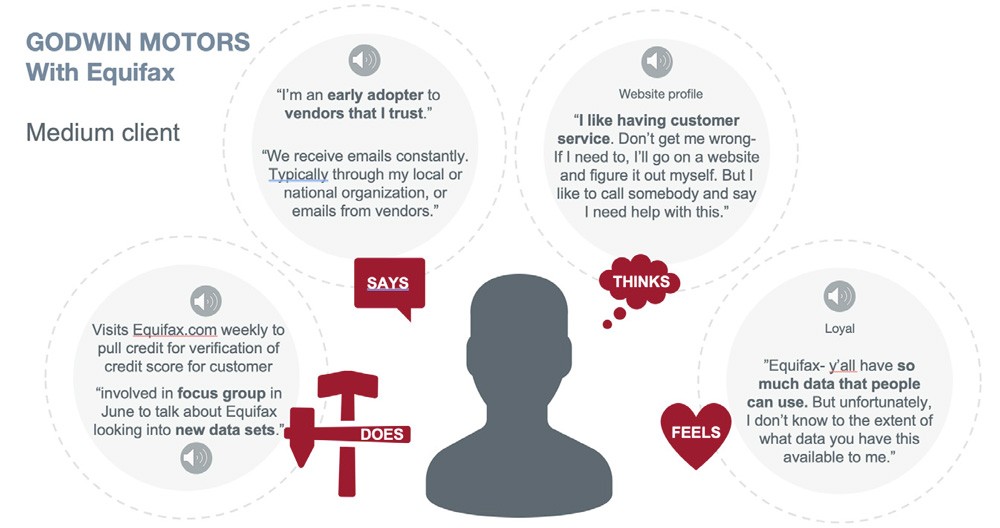
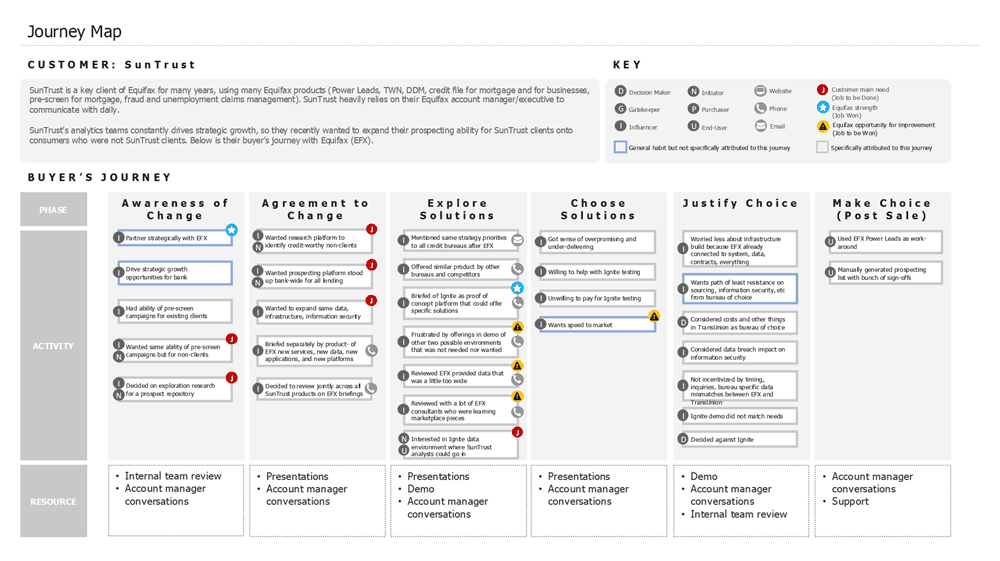
A comprehensive UX research and service design approach was implemented to address these challenges. OneSpring conducted extensive user interviews, persona modeling, and journey mapping and empathy mapping insights into user behaviors and preferences. Analytics from surveys and web interactions were combined with qualitative feedback from remote unmoderated testing to validate findings.
“The improvements to our digital experience have transformed the way our customers interact with our platform, making it easier and more intuitive to access critical insights and solutions.”
– Risk Manager
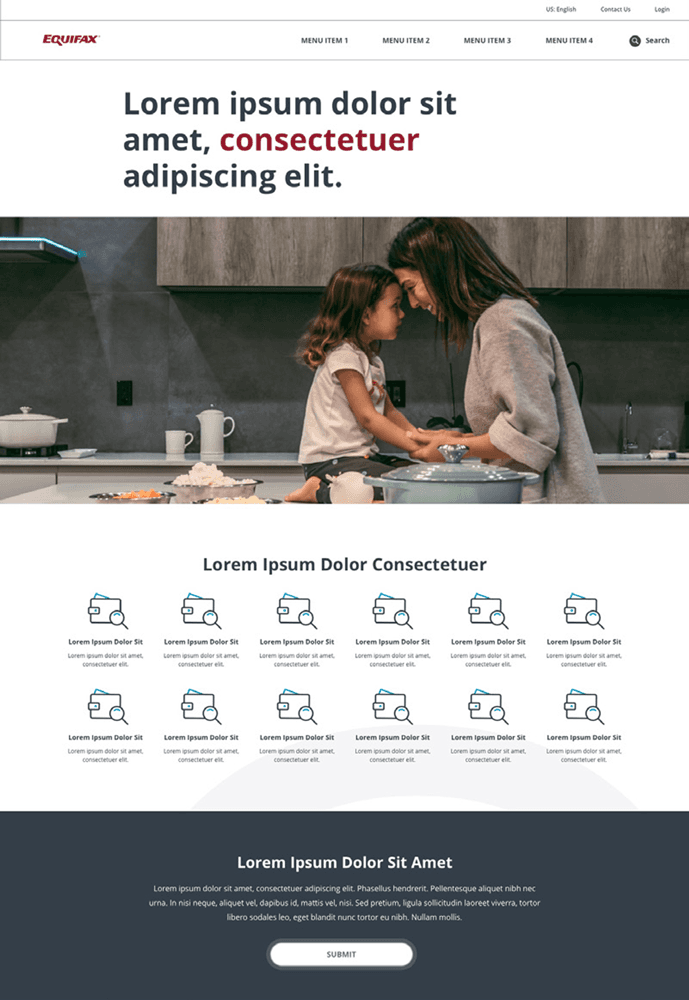
The research revealed key opportunities to streamline navigation, enhance content discoverability, and create a more personalized experience. The redesigned experience introduced clearer nomenclature and labeling to guide users effectively, improved content categorization for self-identification, and implemented a more engaging homepage featuring dynamic thought leadership content.
Product exploration was accelerated by integrating SEO-driven content, video tutorials, and customer testimonials to support decision-making. These enhancements were implemented through iterative design prototyping, usability testing, and stakeholder alignment to ensure a user-centered solution.
Results
The redesigned digital experience significantly improved usability and engagement for Equifax’s B2B customers including:
50% faster product discovery thanks exploration accelerators, such as video content and testimonial-driven decision support.
45% increase in time spent and increasing time spent on relevant pages.
40% more homepage interactions thanks to the refined thought leadership content.
38% increase in overall user satisfaction scores.
35% increase in content consumption.
30% more users engaging more frequently with industry insights.
27% decrease in help desk inquiries related to navigation issues.
25% reduction in user confusion thanks to restructuring of product updates and news.
22% increased conversions from testimonials and video content.
20% lower bounce rates due to navigation improvements and clearer categorization.
All of these numbers demonstrate the success and business value of the UX-driven improvements. Ultimately, the UX service design approach not only enhanced the digital experience but also strengthened Equifax’s position as a trusted strategic partner for its business customers.
Frequently Asked Questions
Why did Equifax need to improve its B2B digital experience?
Equifax's B2B customers were using the site primarily as a transactional portal — logging in to access products and then leaving. They weren't discovering thought leadership content, product updates, or industry insights that Equifax invested in producing. Navigation challenges and unclear labeling were limiting engagement and preventing Equifax from positioning itself as a strategic partner.
What UX research methods did OneSpring use for the Equifax project?
OneSpring conducted extensive user interviews, persona modeling, journey mapping, and empathy mapping to understand how B2B customers interact with the site. This qualitative research was combined with web analytics, survey data, and remote unmoderated usability testing to validate findings and quantify the scope of usability issues.
What design changes improved Equifax's B2B portal?
The redesign introduced clearer navigation nomenclature and labeling, improved content categorization to help users self-identify their segment, a more dynamic homepage featuring thought leadership content, integrated SEO-driven articles, video tutorials, and customer testimonials to support product decision-making.
What measurable results did the Equifax B2B redesign achieve?
Product discovery was 50% faster. Time on relevant pages increased 45%. Homepage interactions grew 40%. Overall user satisfaction rose 38%. Content consumption increased 35%. Industry insight engagement grew 30%. Help desk inquiries from navigation issues dropped 27%. Bounce rates fell 20%. Conversions from testimonials and video content improved 22%.
What is UX service design and how is it different from standard UX?
UX service design takes a systems-level view of the customer experience — mapping the full journey across channels, touchpoints, and organizational functions. For Equifax, this meant not just redesigning individual pages but rethinking how content, navigation, and personalization work together to serve distinct B2B user segments from first visit to purchase.
How does content discoverability affect B2B customer engagement?
B2B buyers research extensively before purchasing. If they can't easily find case studies, thought leadership, or product comparisons, they turn to competitors who make that information more accessible. For Equifax, improving content discoverability directly translated to longer session times, more page engagement, and higher conversion rates.
How did persona modeling improve the Equifax redesign?
Persona modeling helped the team understand the distinct goals, knowledge levels, and frustrations of different Equifax B2B user types — from first-time visitors to seasoned account holders. These personas guided decisions about content prioritization, navigation depth, and the level of personalization needed to serve each segment effectively.